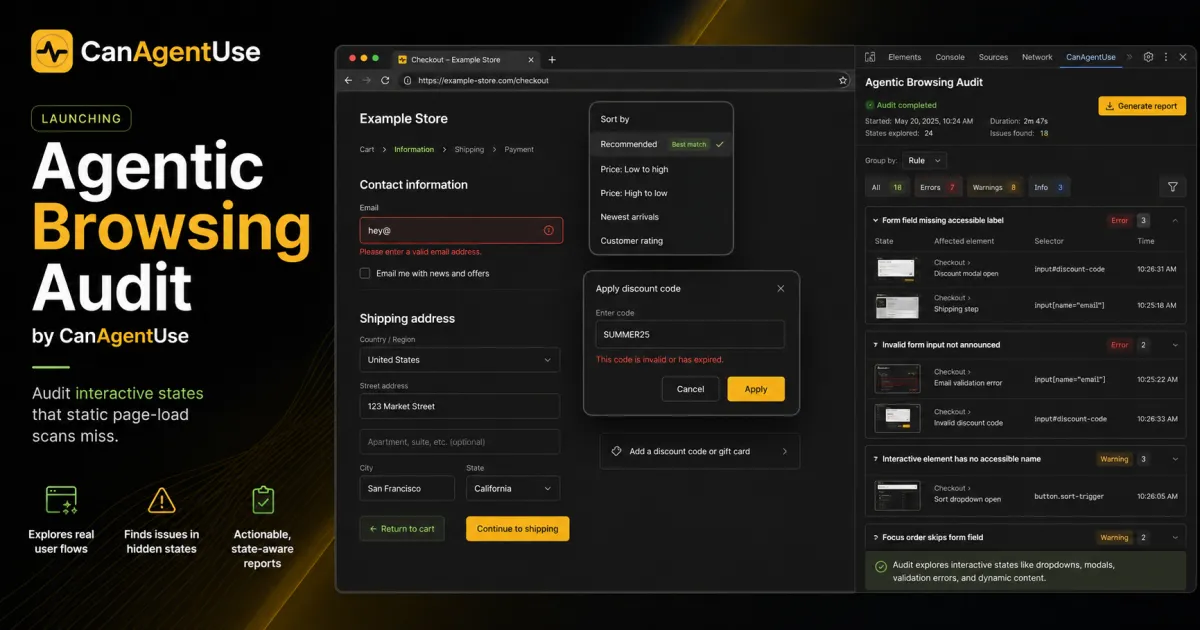
Agentic Browsing Audit launch
A Chrome DevTools extension for finding agentic browsing issues in dialogs, menus, drawers, popovers, form errors, checkout steps, and other UI states.
CanAgentUse Blog
Field notes on AI agent readiness scans, machine-readable website structure, GEO, AIO, API discovery, and the surfaces that help AI systems understand and use your site.

Featured
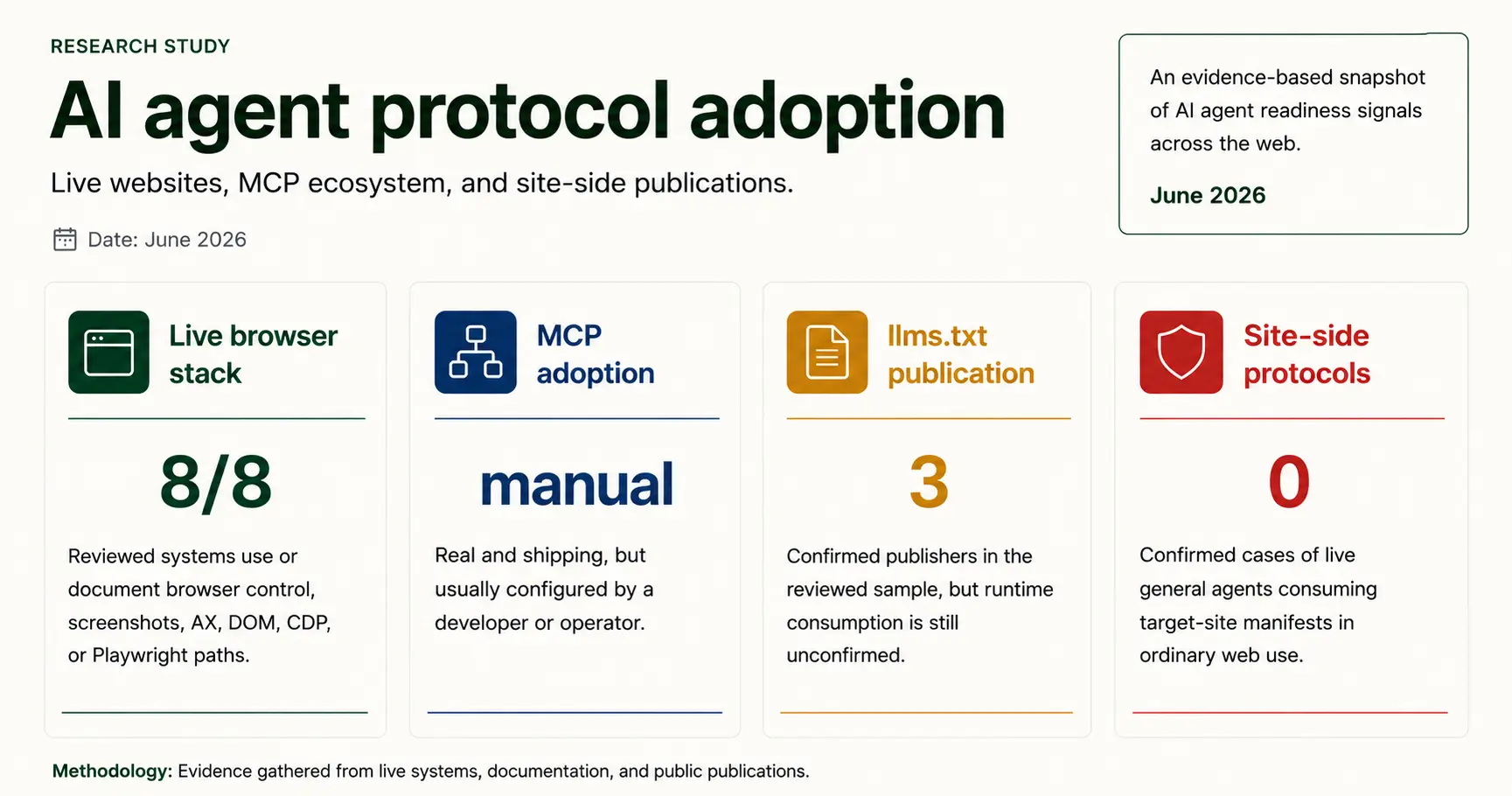
Research across 8 agents found 0 confirmed cases of live web agents using site-side protocols, while browser automation and semantic HTML led adoption in 2026.
Read guideAll articles

A Chrome DevTools extension for finding agentic browsing issues in dialogs, menus, drawers, popovers, form errors, checkout steps, and other UI states.

CanAgentUse MCP Server lets coding agents run scans, read evidence, fetch Skill Markdown, authenticate with OAuth, and pull fix instructions from one remote endpoint.

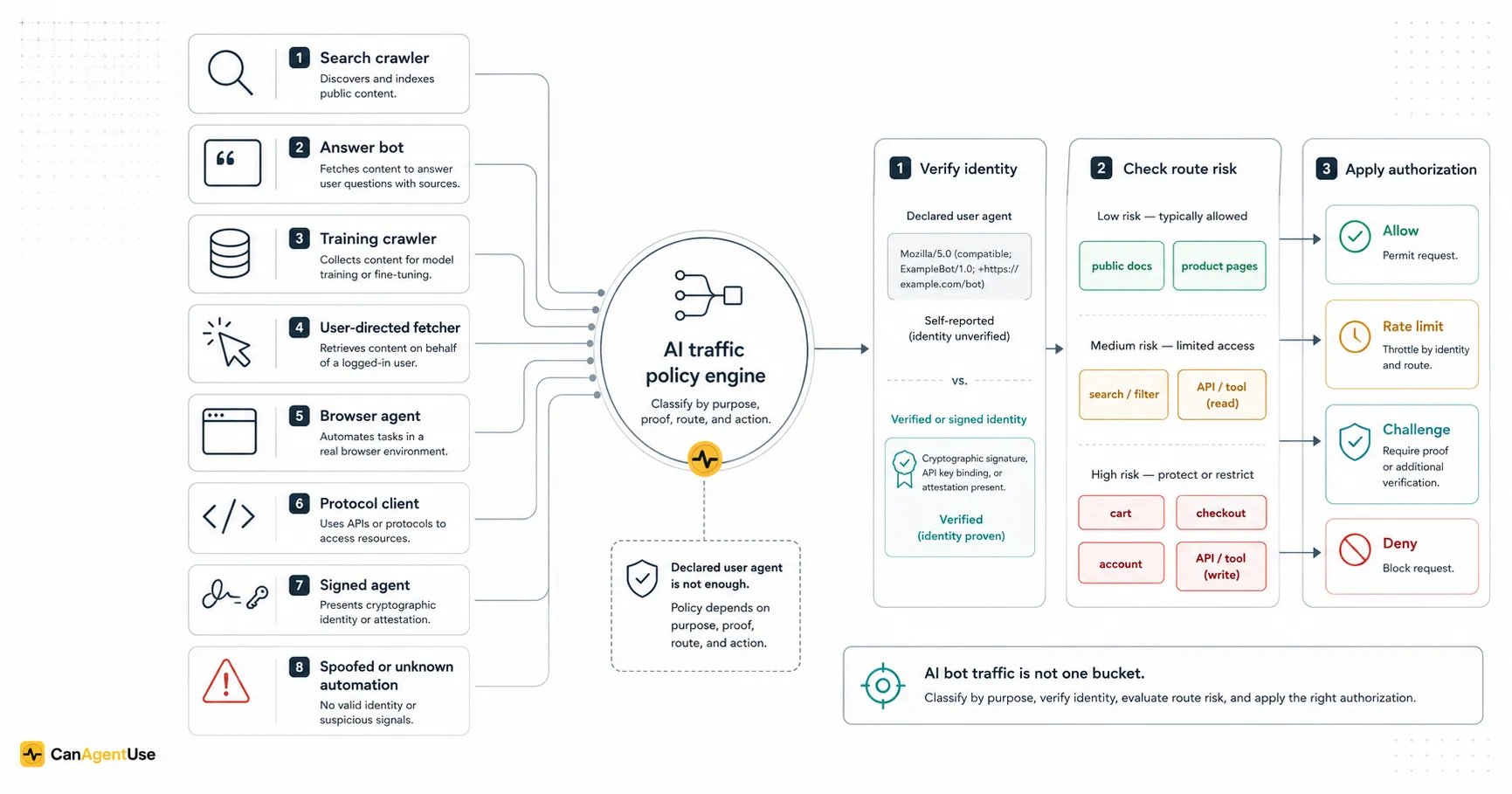
AI bot traffic taxonomy guide: 8 classes, route risk, signed agents, verification, logs, and policy for crawlers and user agents.

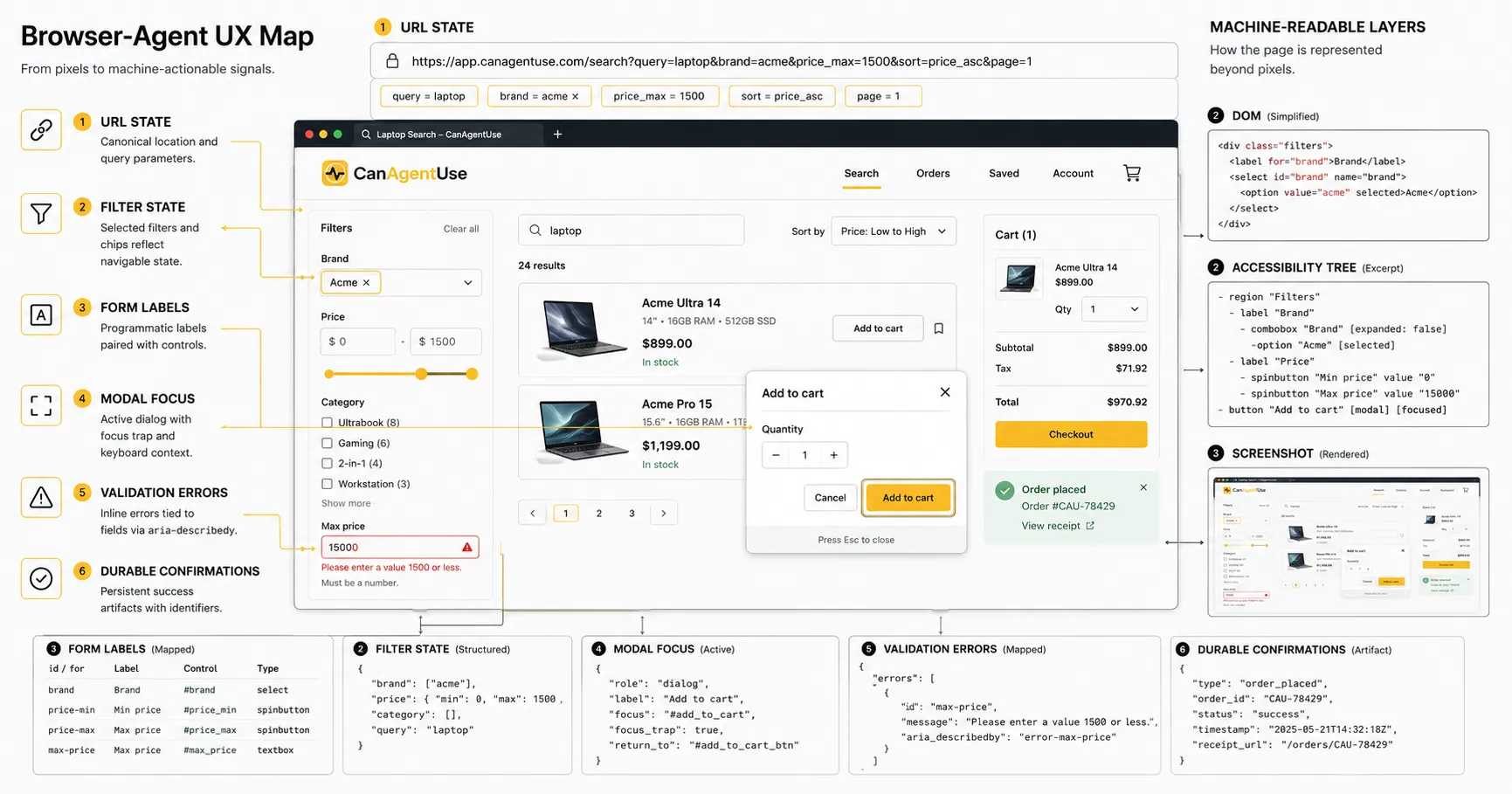
Browser agent UX guide with 6 signals, 14.41% WebArena baseline, form labels, filter state, modal focus, and durable confirmations.

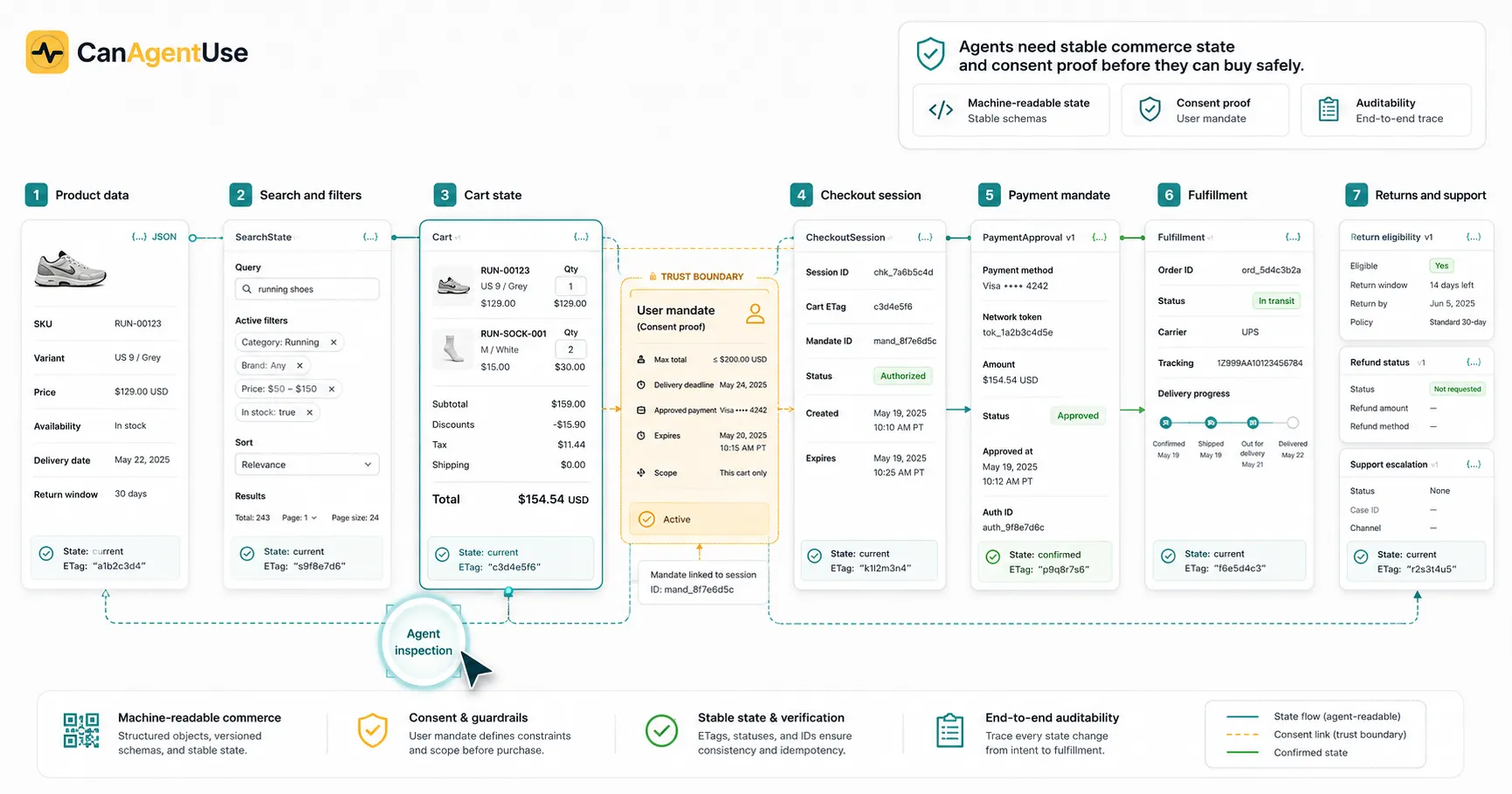
Agentic commerce readiness guide: product data, carts, checkout, mandates, policy, and support for 8 AI-shopping failure modes.

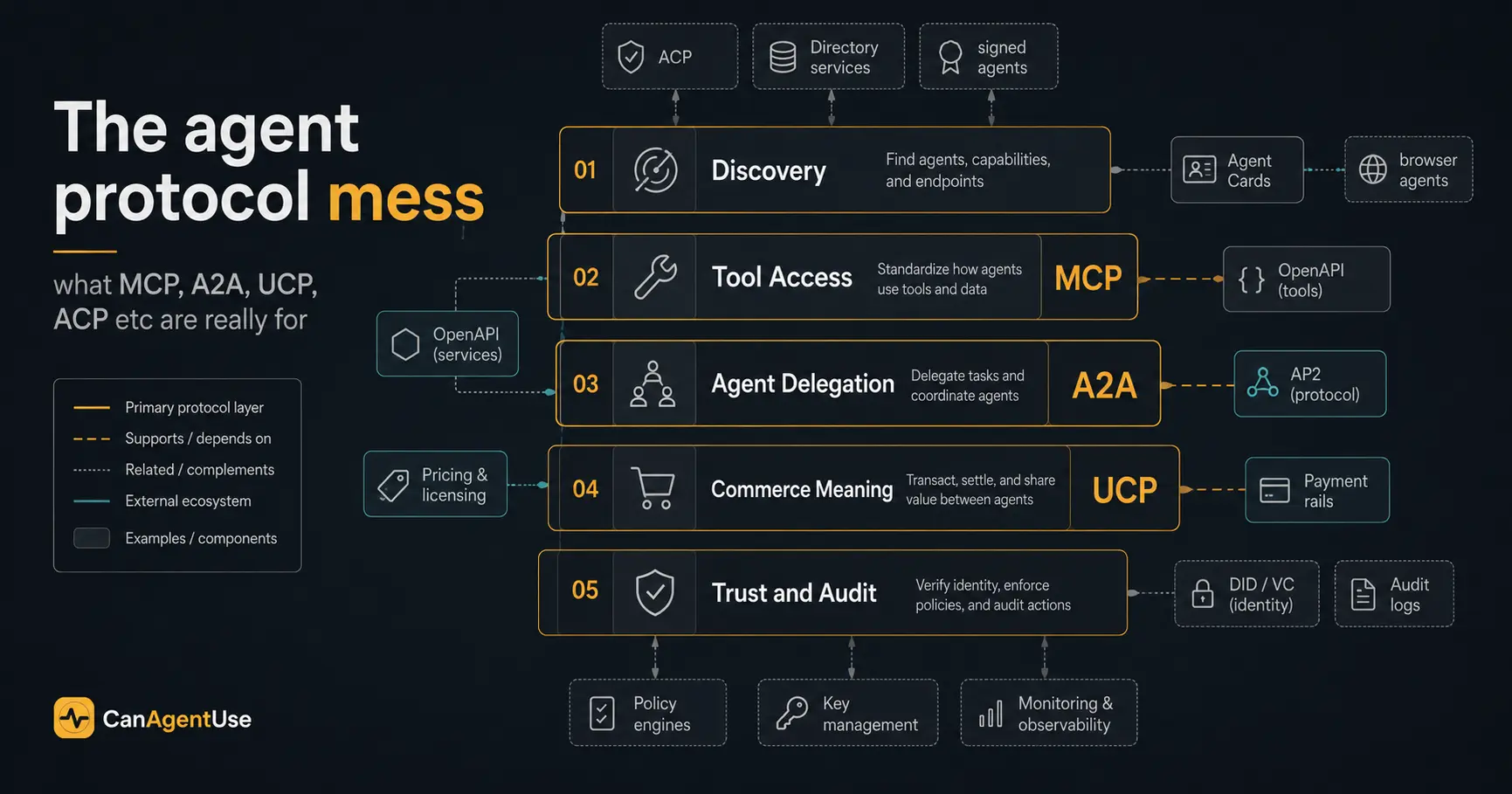
MCP, A2A, UCP, ACP, and nearby agent protocols are easy to confuse. MCP is access, A2A is delegation, and UCP is commerce meaning.

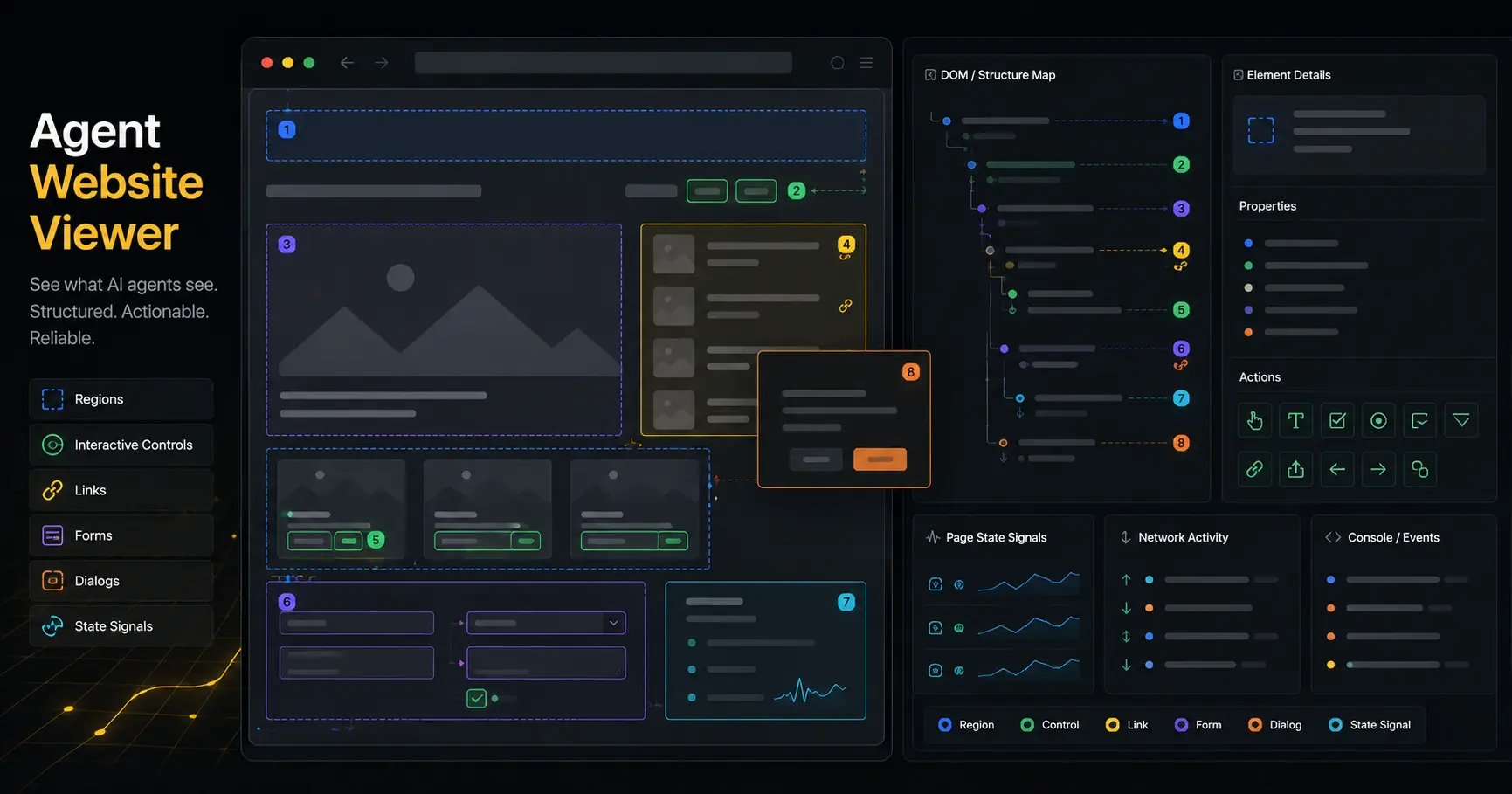
CanAgentUse Agent Website Viewer turns a public web page into an agent-readable map of structure, controls, names, states, warnings, and interaction signals.

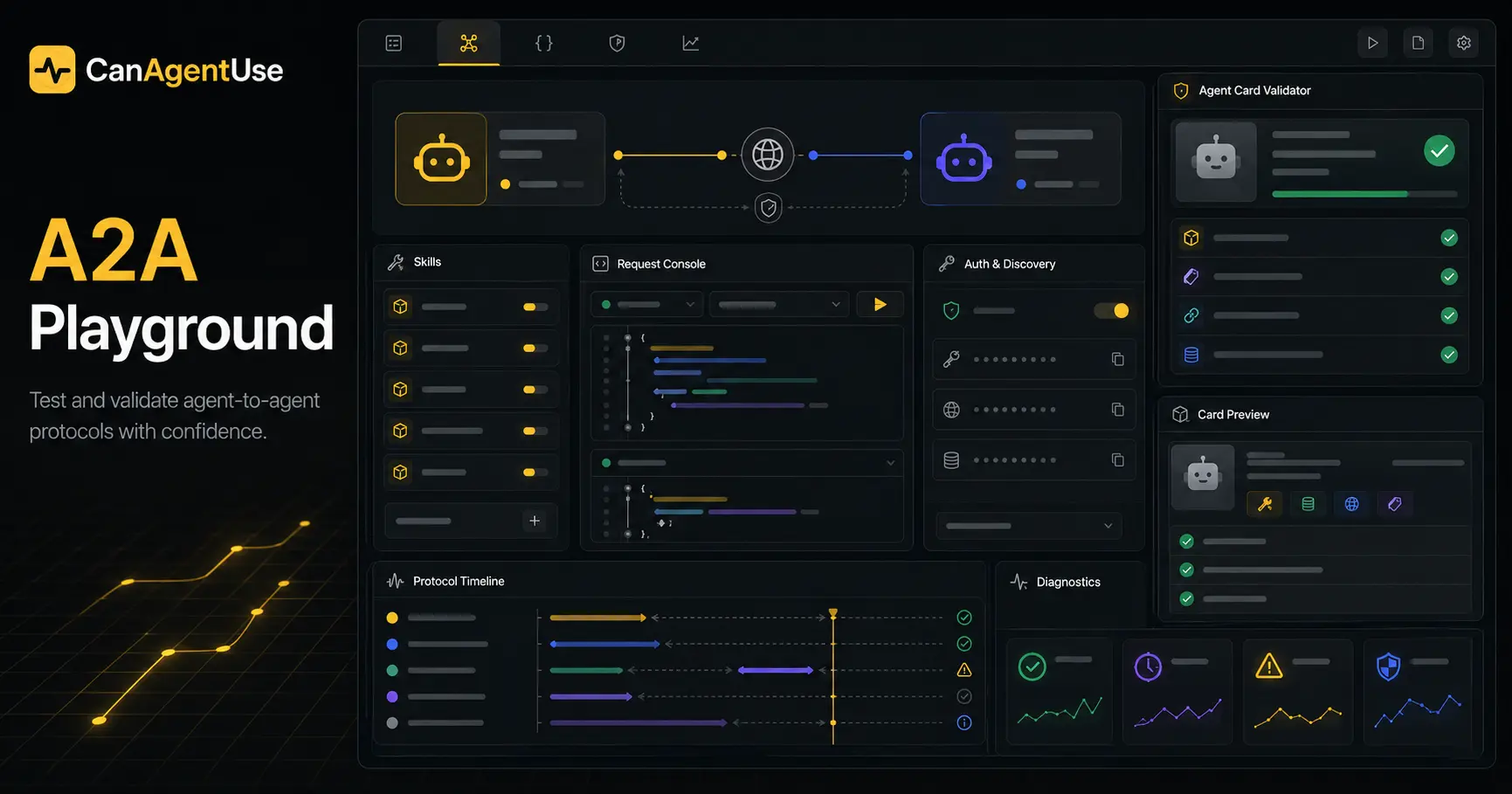
CanAgentUse A2A Playground validates Agent Cards, checks discovery and version rules, prepares JSON-RPC and HTTP+JSON requests, and gives teams fix guidance before launch.

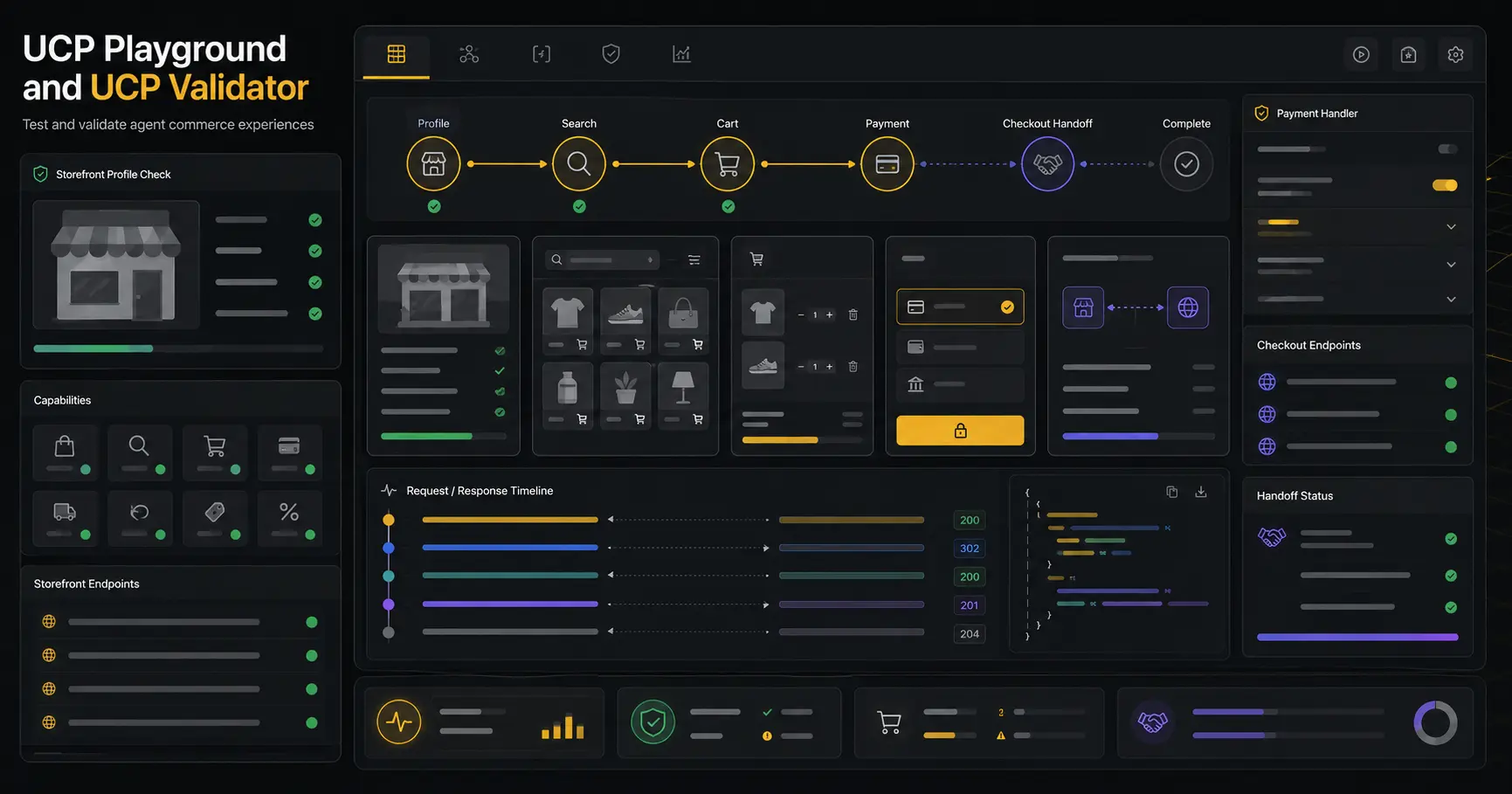
CanAgentUse UCP Validator checks /.well-known/ucp profiles, while UCP Playground lets teams test product search, carts, checkout state, payment handlers, and handoff links.

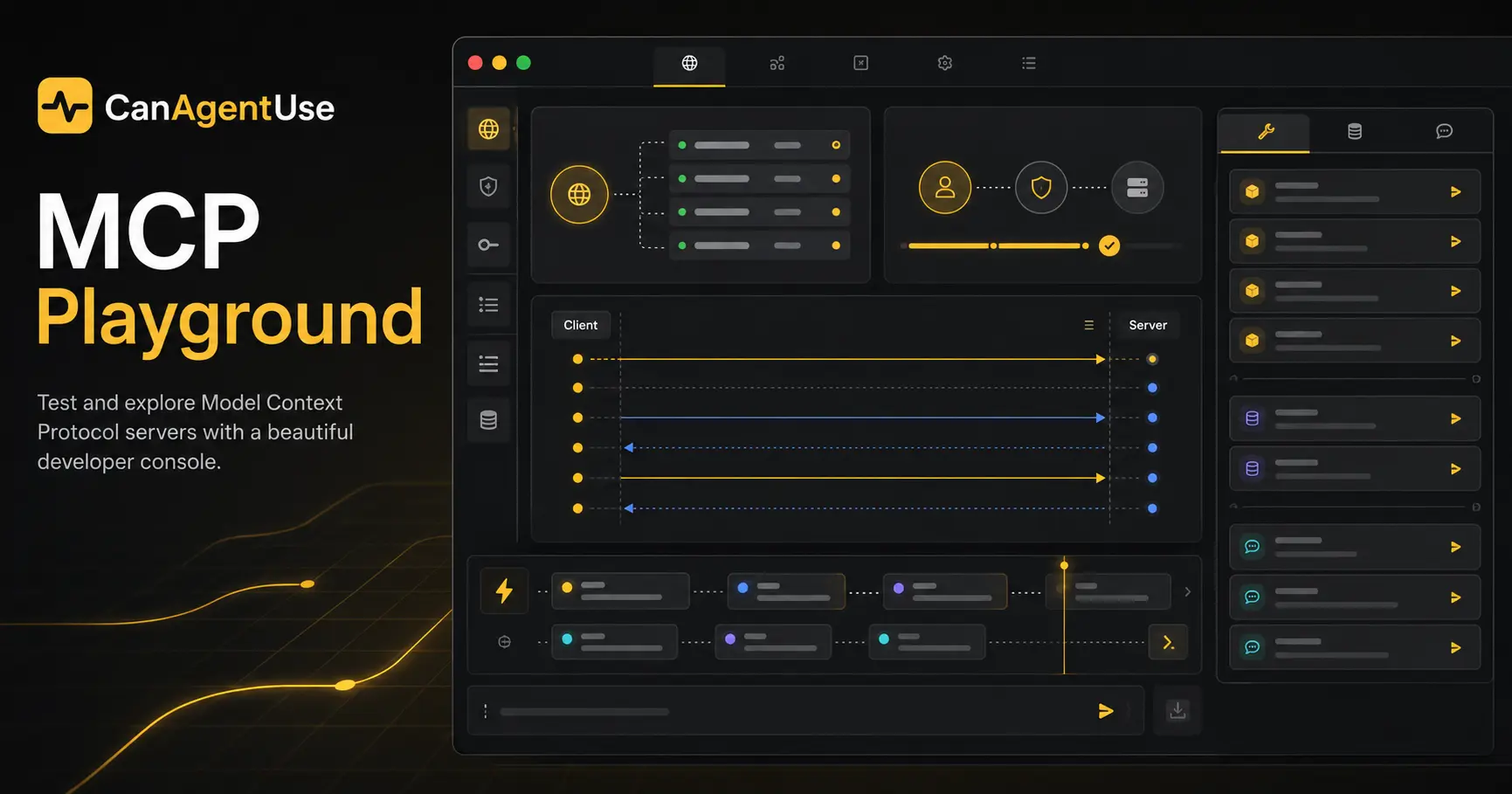
CanAgentUse MCP Playground helps teams discover, connect to, inspect, and debug remote MCP servers with OAuth, headers, tools, resources, prompts, JSON-RPC, and event timelines.

Research across 8 agents found 0 confirmed cases of live web agents using site-side protocols, while browser automation and semantic HTML led adoption in 2026.

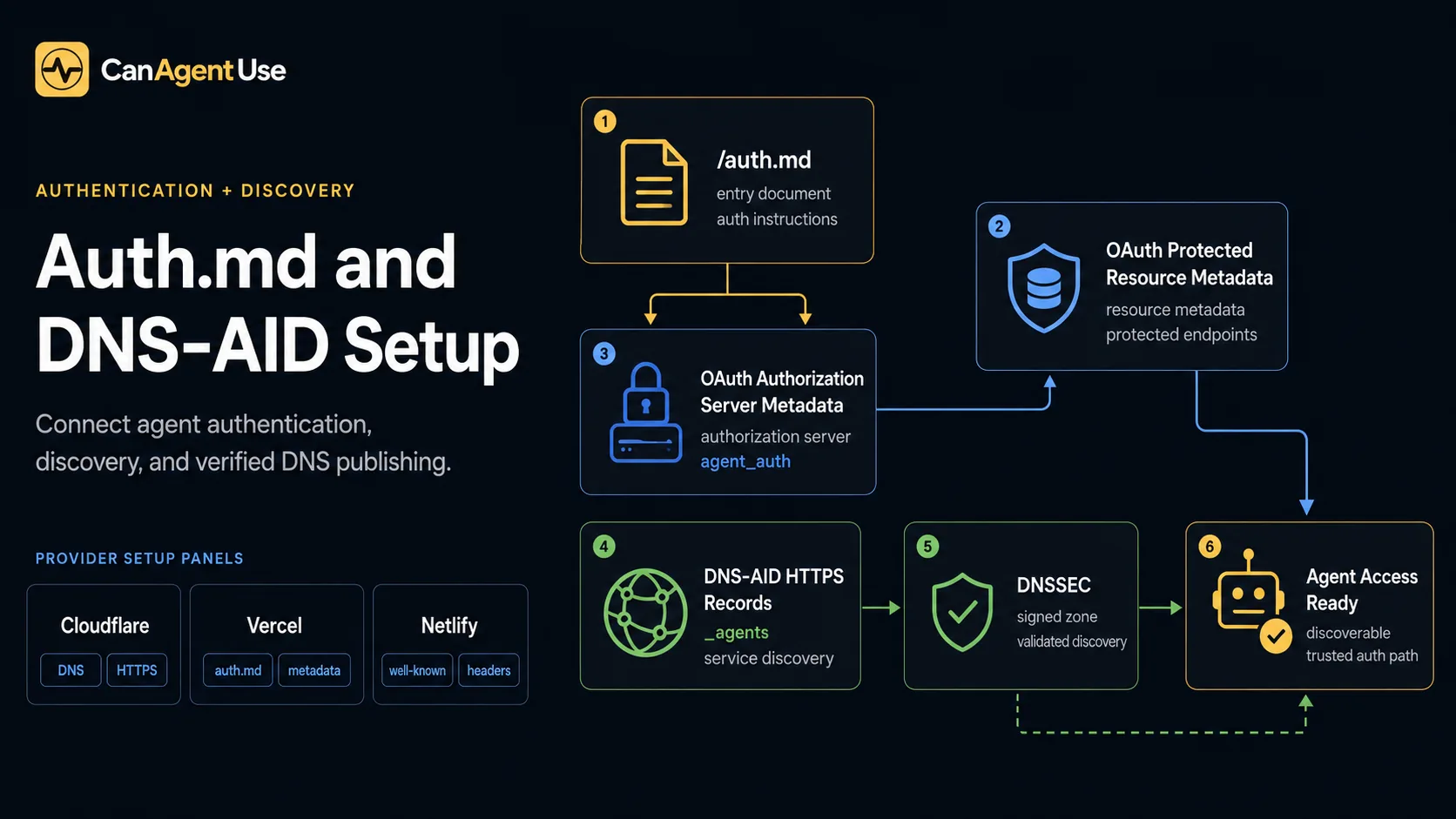
Set up Auth.md and DNS-AID in 2026 with Cloudflare, Vercel, Netlify, OAuth metadata, HTTPS/SVCB records, DNSSEC, and 8 checks.

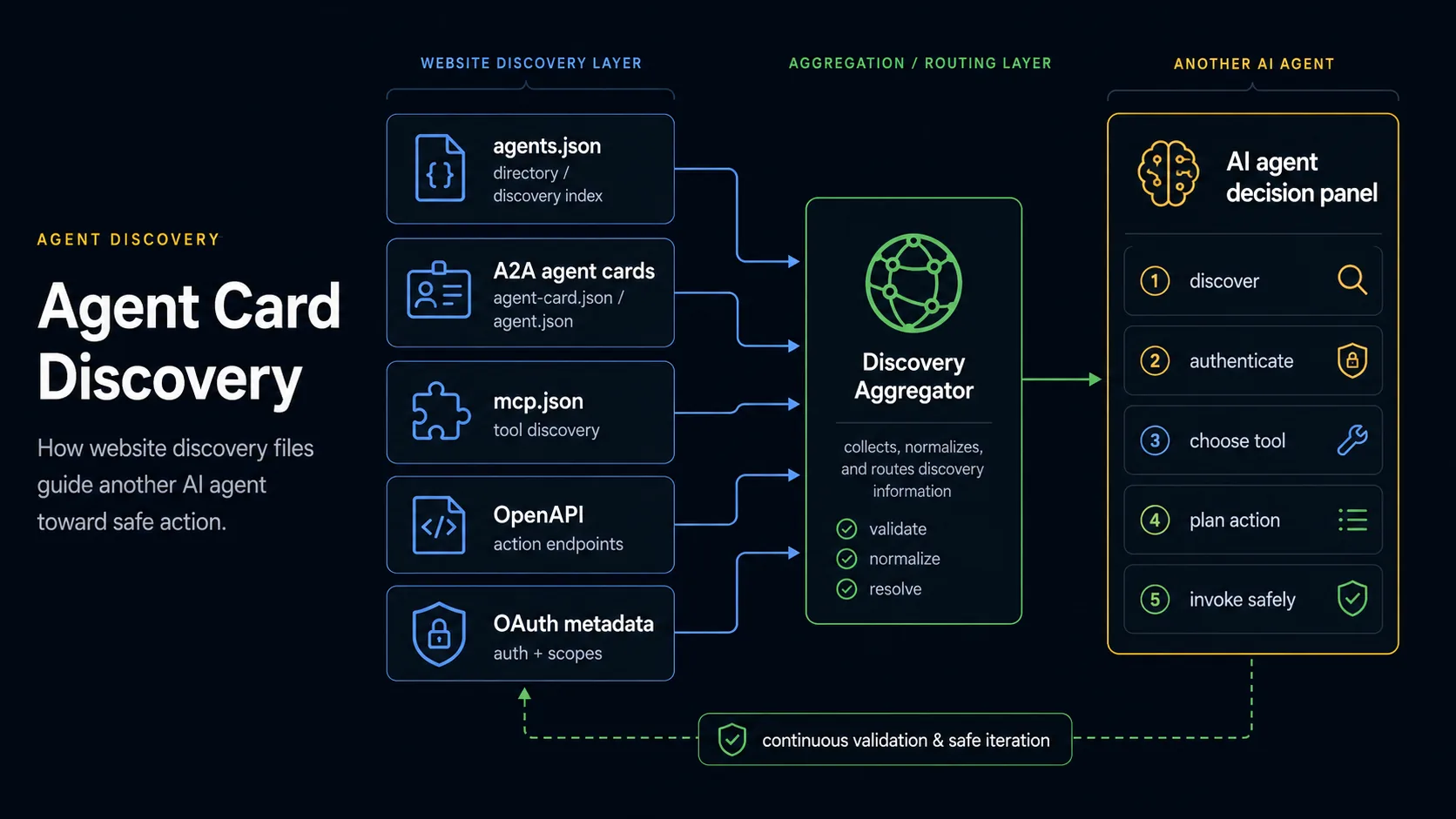
Plan A2A agent card discovery in 2026 with agent-card.json, agent.json, agents.json, mcp.json, OpenAPI links, OAuth scopes, and 8 audit checks.

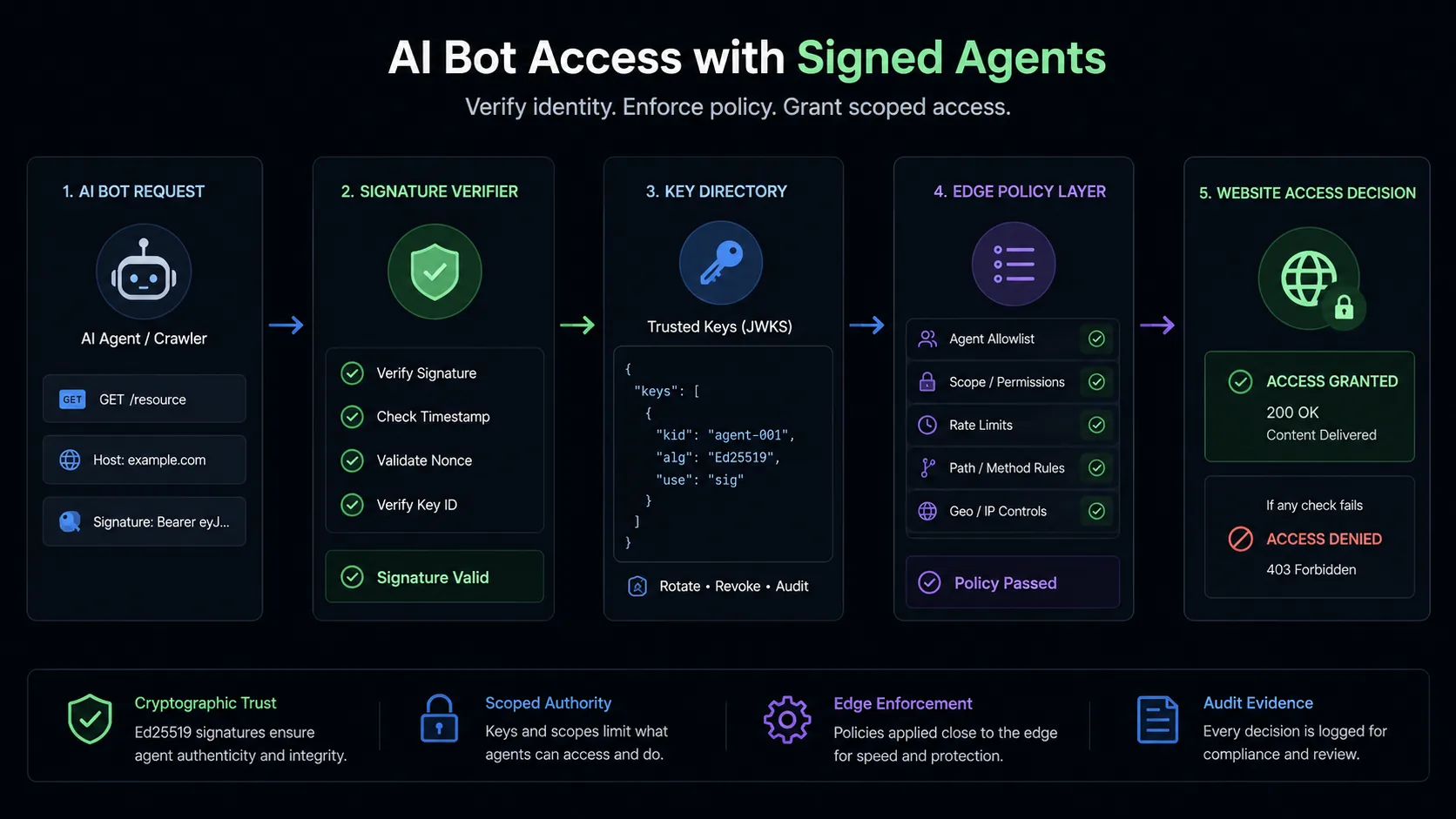
Audit AI bot access with Web Bot Auth, signed agents, Cloudflare verified bots, HTTP message signatures, OAuth, API keys, and edge rules.

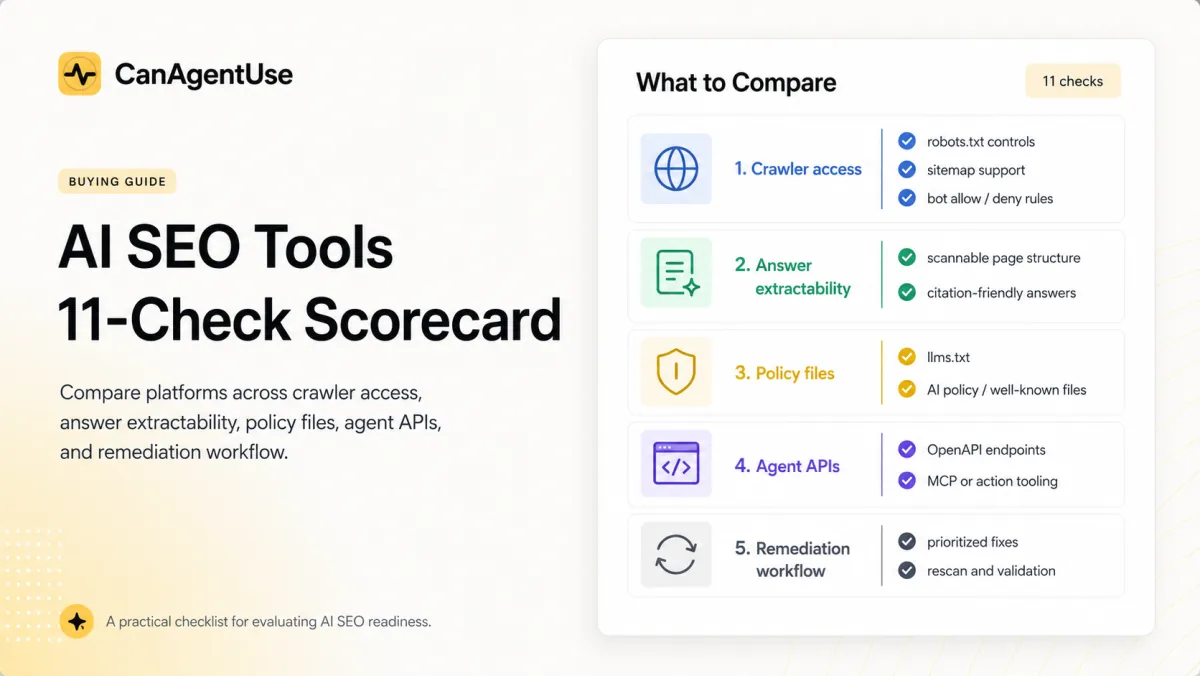
Compare AI SEO tools with 11 checks for crawler access, visibility tracking, schema, llms.txt, OpenAPI, MCP, reporting, remediation, proof, and fixes.

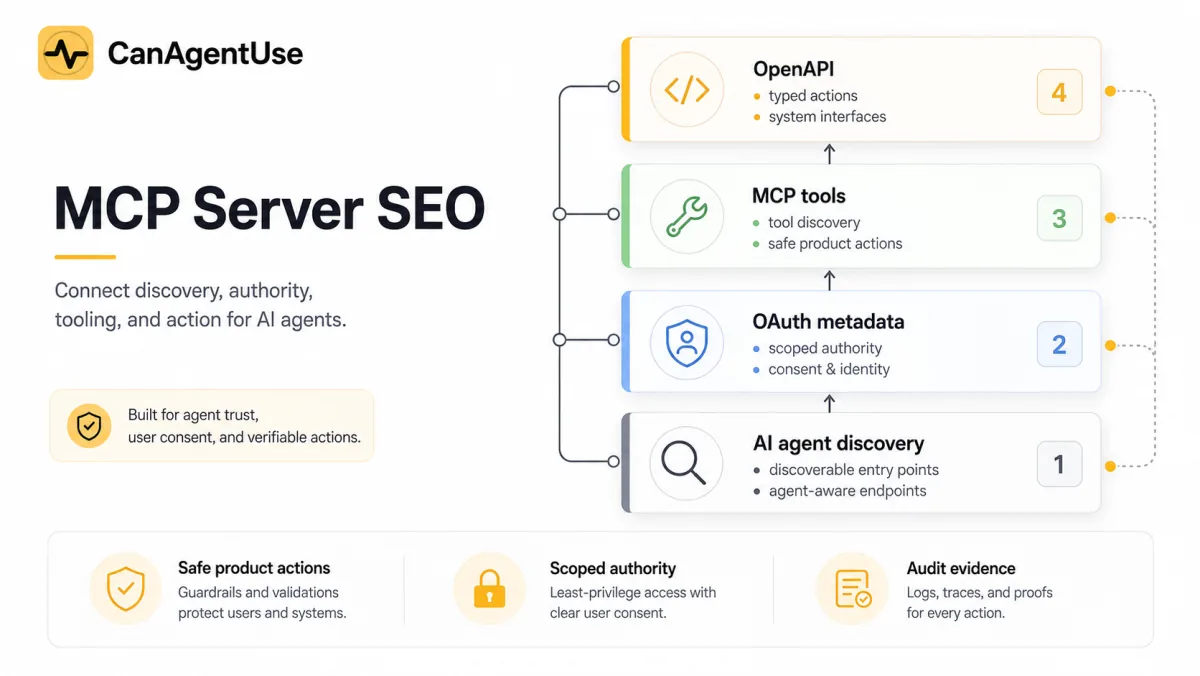
MCP server SEO is technical discovery: OpenAPI, API catalogs, MCP initialize, tools/list, tools/call, OAuth metadata, safe actions, logs, and auth scopes.

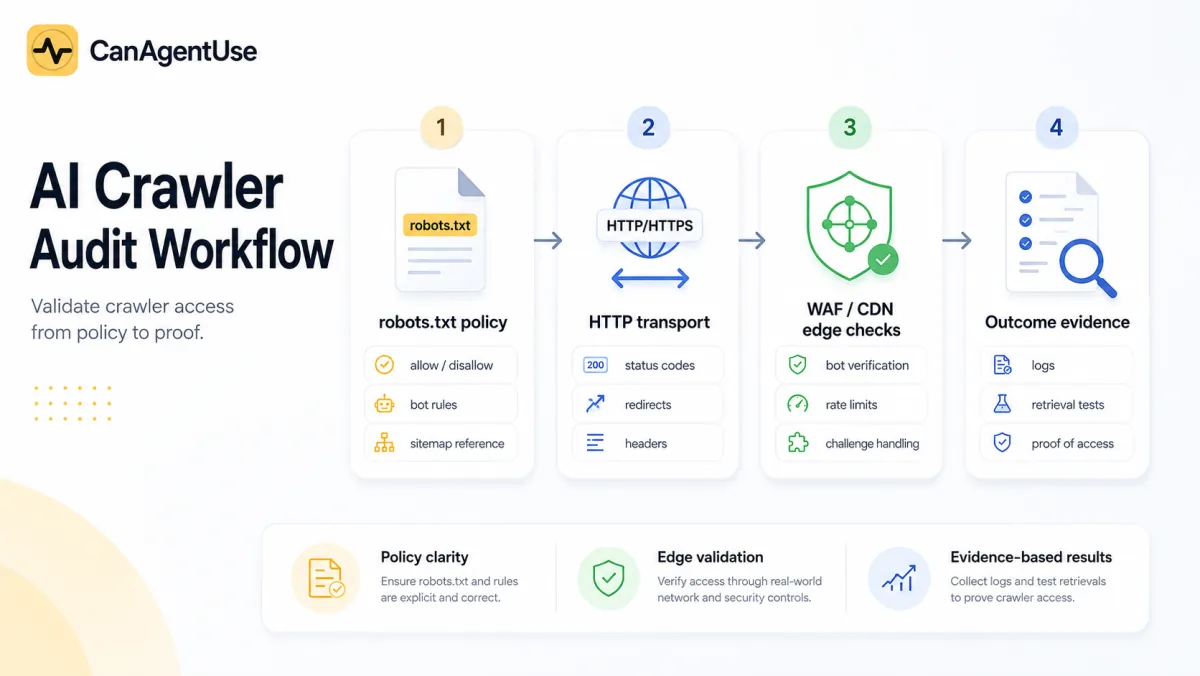
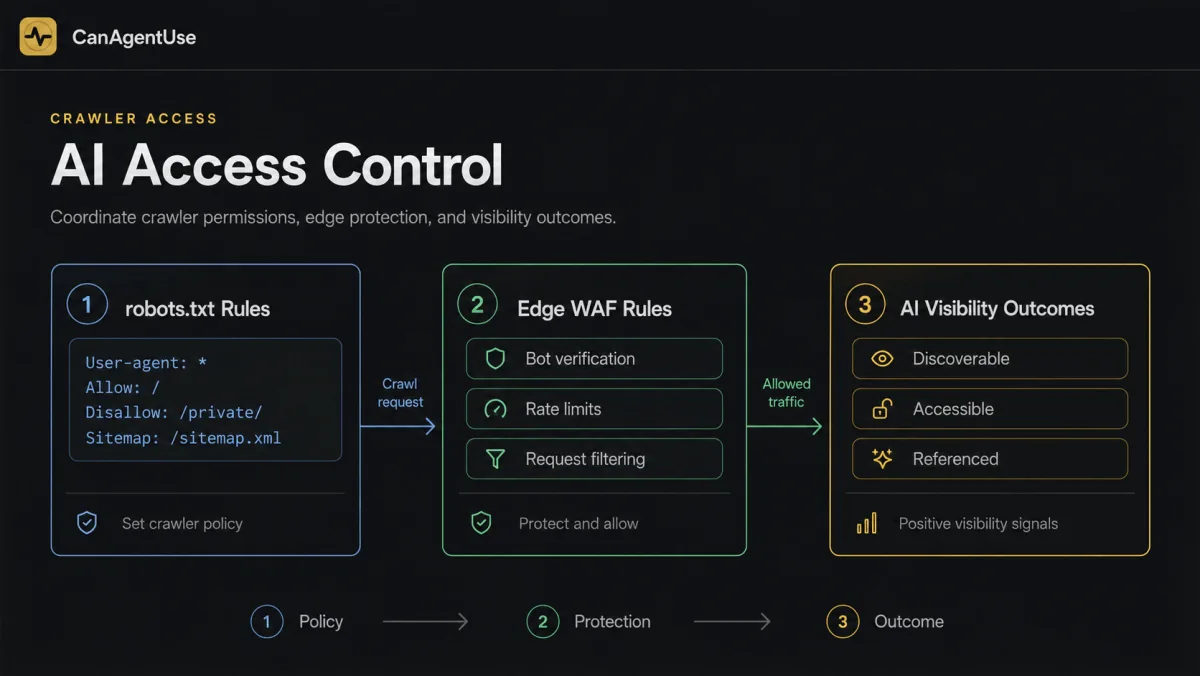
Run a 7-layer AI crawler audit across 13 bots, robots.txt, Content-Signal, WAF rules, status codes, logs, IP verification, retrieval proof, and fixes.

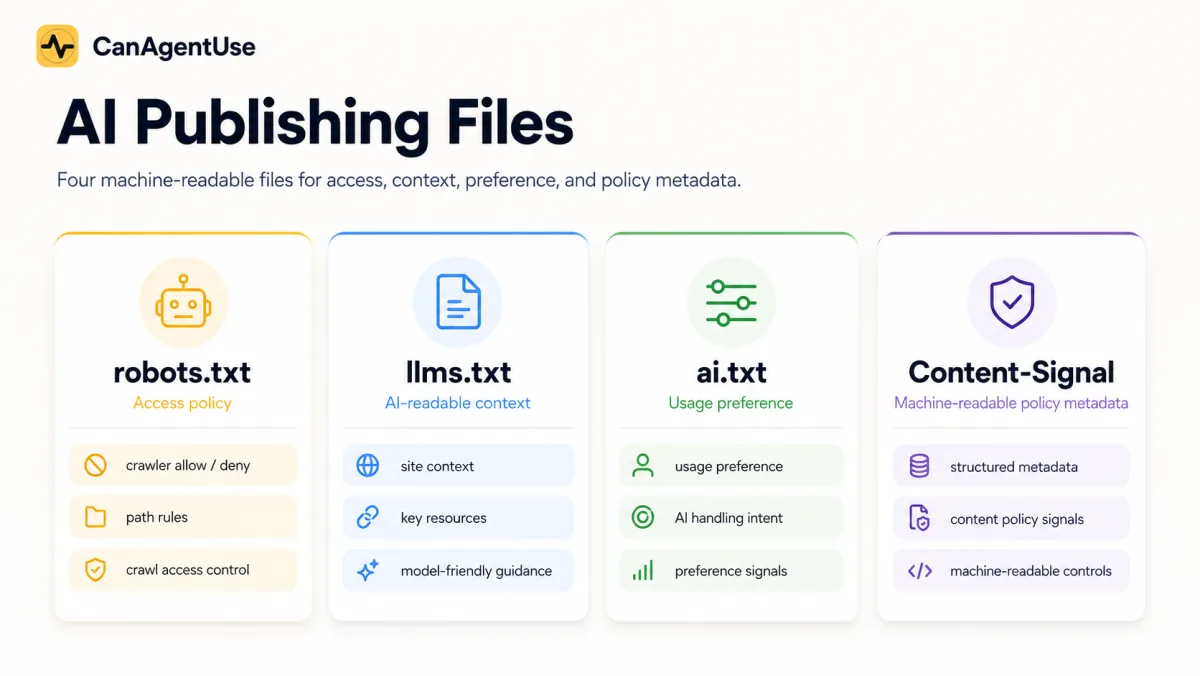
Compare 4 AI publishing signals: robots.txt, llms.txt, ai.txt, and Content-Signal, with audit steps for crawl access, context, policy, proof, and updates.

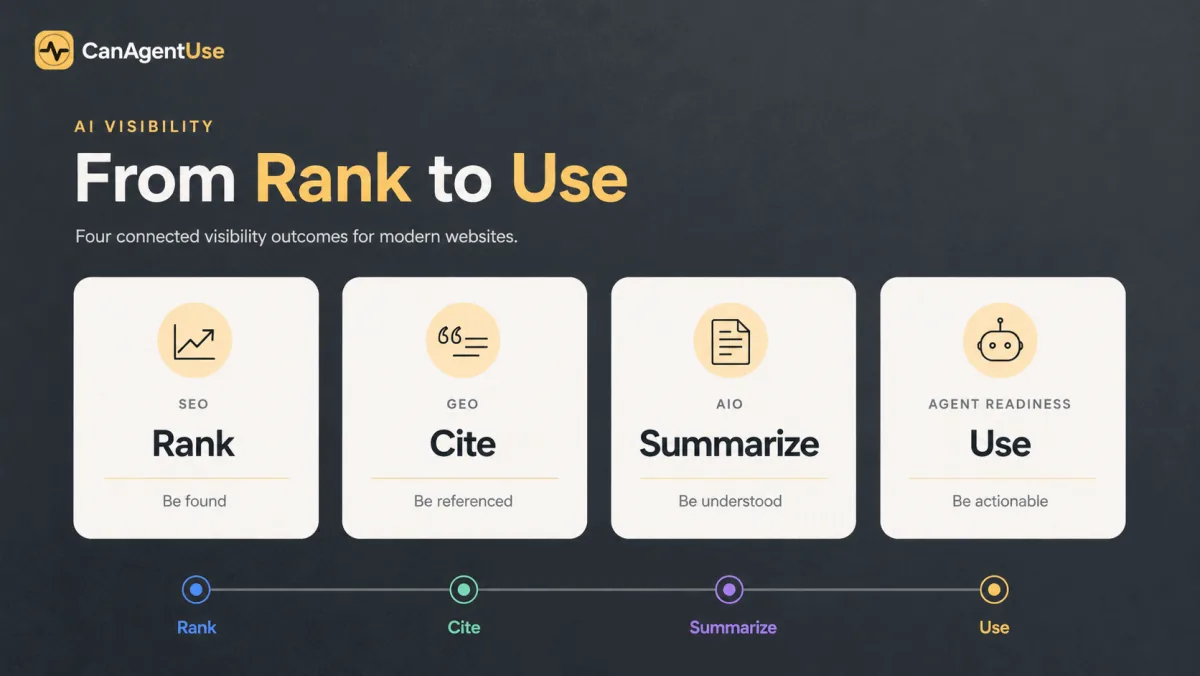
AI summaries changed search behavior: Pew found 8% click rates with summaries vs 15% without. Build SEO, GEO, AIO, and agent readiness as one measurable system.

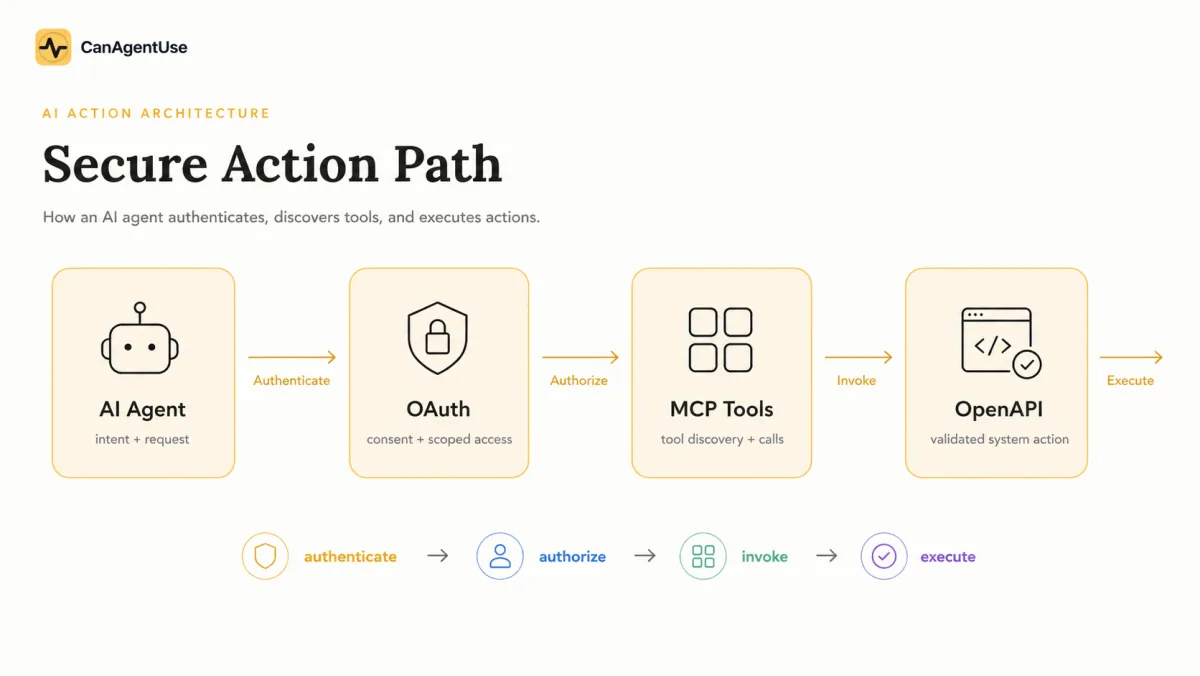
Agents need more than crawlable pages. Build an action layer with OpenAPI, OAuth, MCP tools, safe confirmation, measurable workflows, and audit logs now.

OpenAI, Anthropic, and Perplexity split training, search, and user-fetch bots. Allow AI visibility without losing control of training access or edge security.

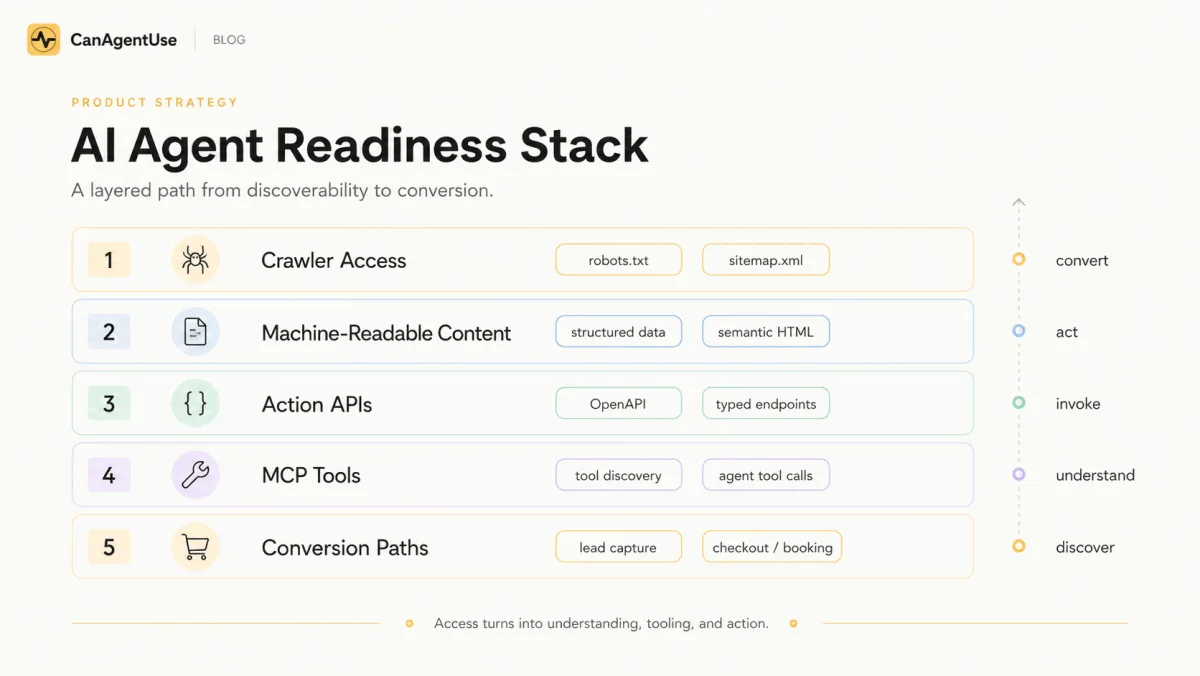
AI summaries cut search clicks from 15% to 8%. Learn the agent-readiness checks that help AI systems crawl, cite, use, and convert on your site in 2026.